


July 16, 2026
Imagine turning on your pool heater from your phone before you even leave the office, so the water is ready the moment you get home. Pool automation makes that a reality. It is one of the most requested upgrades we install across the Texas Hill Country right now. At Pool Smart, we get calls from Kerrville, Lakeway, and Steiner Ranch homeowners every week. They want to know what automation actually does, and whether it is worth the investment. Here is the honest breakdown.
Pool automation is a system that lets you control your pool's equipment remotely. Most homeowners manage it through a smartphone app or a wall mounted control panel. It connects to your pump, heater, lights, and chemical feeders.
A basic automation system typically controls four core functions: filtration scheduling, heating, lighting, and water features like waterfalls or fountains. More advanced systems add chemical monitoring and salt cell management into that same control panel.
Many older pools already have a basic timer that turns the pump on and off at set hours. Automation goes far beyond that.
Instead of a fixed schedule, automation adjusts based on real conditions. For example, some systems increase filtration automatically during a hot Texas afternoon, when chlorine burns off faster. They scale back overnight, once demand drops.
Texas heat is intense for a large part of the year. Manually managing a pool through that stretch gets old fast. Automation removes the guesswork.
Remote access is the single biggest reason homeowners upgrade. You can turn on the heater from your phone on the drive home. The water hits temperature by the time you walk out back, instead of you waiting an hour after getting home to start it manually. That small change ends up saving real time across a full pool season.
We installed automation for a Lakeway homeowner last spring. She kept forgetting to turn off her water feature before leaving for work. Her water bill had crept up for months before she realized what was happening. Automation solved it in one afternoon, since she could finally schedule the fountain to run only during actual pool hours.
* A complete automation package usually covers several components working together, not just one app.
* A control unit installed near your equipment pad, wired into your existing pump, heater, and lighting circuits
* A smartphone app or web dashboard for remote control from anywhere with internet access
* Optional sensors for water temperature, chemical levels, and salt cell output
* Wi-Fi connectivity, which sometimes requires a signal booster if your equipment pad sits far from your router
If you run a saltwater pool, automation adds real value here specifically. Salt cells can be monitored remotely, so you catch a failing cell before algae shows up instead of after.
Automated salt monitoring often prevents the exact problem that sends homeowners calling for emergency service. Catching declining output early means adjusting settings before your pool loses chlorine production. Nobody wants to discover the problem once the water already looks off.
Basic automation systems typically run $1,500 to $3,000 installed, covering pump, heater, and lighting control through a smartphone app. This is the entry point most Kerrville and Steiner Ranch homeowners start with.
Mid range systems with salt cell monitoring and water feature control usually cost $3,500 to $5,500. Full systems with chemical dosing automation and advanced sensors can run $6,000 to $9,000. The final number depends on how many components need integration.
Older pools sometimes need equipment upgrades before automation can even connect properly. A pump or heater built before around 2015 may lack the compatibility automation systems expect. That gap adds cost beyond the automation hardware itself.
Wiring distance also matters. A control unit installed close to your equipment pad costs less to wire. One requiring a longer run back to your home's electrical panel costs more.
Some homeowners assume automation replaces the need for regular service visits entirely. That is simply not true. Automation manages scheduling and remote control. It does not physically clean your pool, brush algae, or replace worn equipment parts.
Another misconception involves security. Homeowners sometimes worry that a smart pool system opens up a security risk. In practice, trusted automation brands use the same security standards as other smart home devices. The actual risk is minimal compared to the convenience gained.
Start by naming what actually bothers you about your current setup. If forgetting to turn things off is your main frustration, a basic system solves that immediately.
If you run a saltwater pool, or want proactive chemical monitoring, spend the extra money on a mid range or full system upfront. Adding sensors later often costs more than including them during the original install.
Most homeowners picture a long, disruptive process, but automation installs are usually faster than expected. A basic system typically takes half a day to a full day, depending on how much wiring needs to run between your equipment pad and the control unit.
Our technicians test every connected function before leaving, from remote heater control to lighting schedules. We do not consider a job finished until you have successfully controlled your pool from your own phone, standing right there with us to confirm it works the way you expect.
For mid range and full systems with sensors, installation can stretch to two days. Sensor calibration, especially for chemical monitoring, takes extra time to get accurate before the system starts making automated decisions on its own.
Buyers increasingly expect smart features in a home, and a pool is no exception. A pool with automation already installed can be a small but real selling point when you eventually list your Hill Country home.
This matters more in areas like Lakeway and Steiner Ranch, where newer builds often come with smart home features built in from the start. An older pool without automation can feel dated by comparison, even if the equipment itself still works fine.
Automation is not a one time install and forget situation. Software updates roll out periodically, similar to your phone, and keeping the app current matters for both security and new features.
Most systems prompt you automatically when an update is ready. Skipping updates for months at a time occasionally causes small glitches, like a schedule not saving correctly or the app losing connection to the control unit.
We recommend a quick system check during your regular pool service visits. A technician can confirm sensors are reading accurately and that nothing has drifted out of calibration since your last visit.
Basic systems typically start around $1,500 to $3,000. Full systems with chemical monitoring and salt cell integration can run $6,000 to $9,000. Your final cost depends on your existing equipment and how many features you want connected.
In most cases, yes, though pumps or heaters built before around 2015 sometimes need upgrades first for full compatibility. A technician can check your existing equipment during a consultation. That visit tells you what needs replacing and what can connect directly.
It can, but a weak signal sometimes requires a Wi-Fi extender or signal booster installed near the equipment area. This is a common add on for Hill Country properties where equipment pads sit farther from the house.
Often yes. Automation schedules run based on actual need, rather than a fixed timer that may run equipment longer than necessary. Homeowners in Kerrville and Lakeway commonly see a noticeable drop in energy use. That drop usually shows up within the first billing cycle after switching to automated scheduling.
No, automation handles scheduling and remote control, not physical maintenance. You still need regular cleaning, chemical balancing beyond what sensors track, and equipment servicing from a professional.
Yes, automation benefits apply regardless of pool size. Even a smaller pool benefits from remote heater control and automatic filtration adjustments during Texas heat. This investment is not limited to larger properties.
If you are tired of manually managing your pool through a Texas summer, book a consultation with Pool Smart. We will walk you through which automation setup actually fits your home and budget, without pushing features you do not need.

What Marble Falls and Highland Lakes homeowners should know about rock, slopes, lake lots, and timing before building a pool.

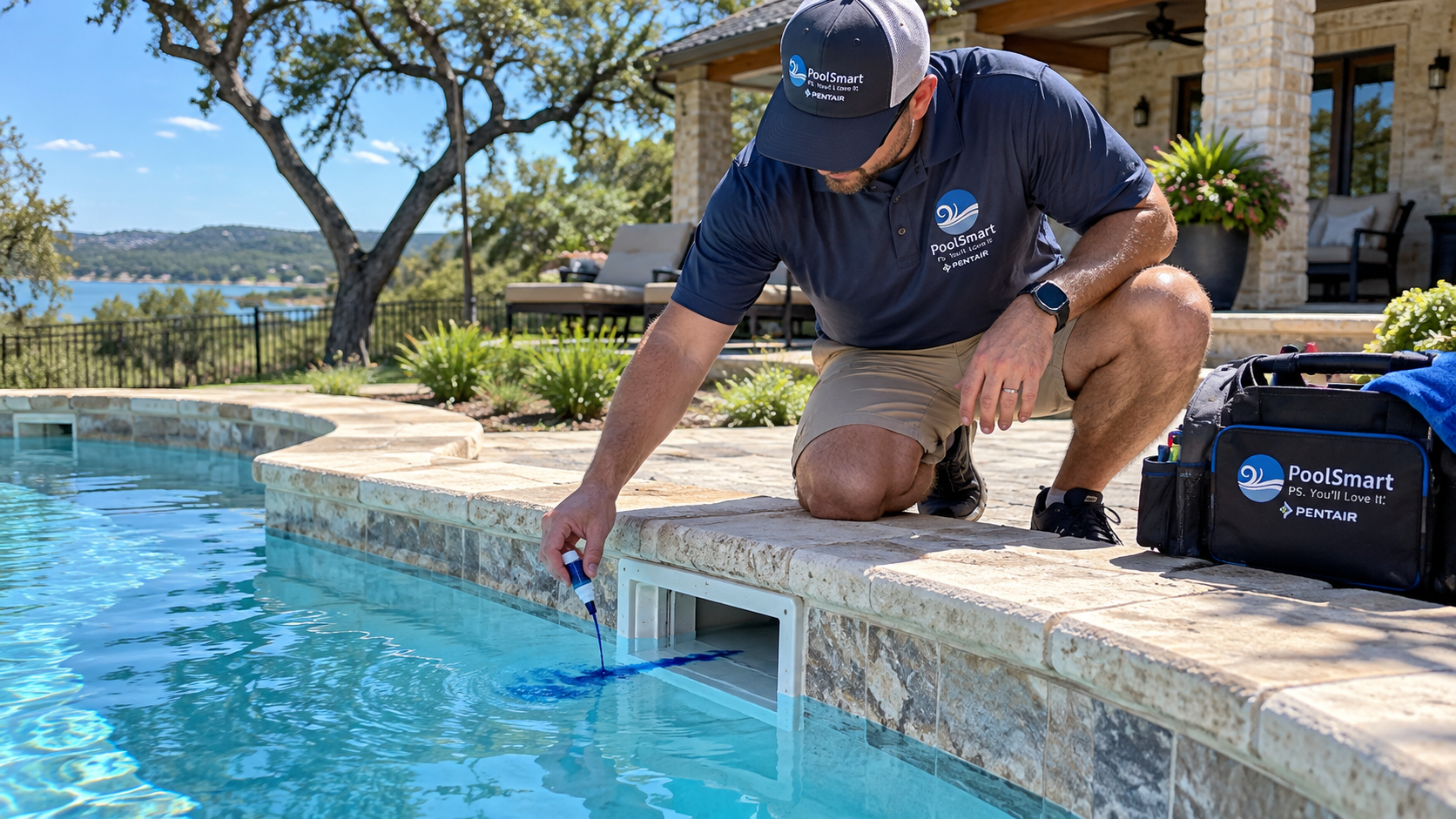
Skimmer leaks are one of the most common causes of pool water loss in Marble Falls and Horseshoe Bay. Learn how to spot the signs, what causes them in the Hill Country, and how Pool Smart fixes them fast.

Standby generators keep your Hill Country home and pool protected when ERCOT goes down. Pool Smart Texas covers installation, freeze protection, and what to expect.
.svg.webp)
