


September 9, 2026
Hill Country homeowners learned something the hard way during the 2021 freeze: ERCOT going down is not a hypothetical. It is a thing that happens, and when it does, the consequences stack up fast. Pipes burst. Pool pumps fail. Equipment that costs thousands of dollars sits exposed to temperatures it was never designed to handle. Pool Smart Texas serves Marble Falls and the surrounding Hill Country communities, and standby generator installation has become one of the most requested services since that winter. This guide covers what a standby generator actually does for your home and your pool, how the installation process works, and why the Hill Country's specific climate makes it a smarter investment here than in most parts of Texas.
The Hill Country does not get the sustained deep freezes that northern states deal with every winter. What it gets instead is rapid, dramatic temperature swings that catch homeowners off guard precisely because they are not expected. Marble Falls, Fredericksburg, Kerrville, Burnet, and the communities along the Highland Lakes corridor sit at elevations and in terrain that channels cold air differently than the flatlands to the east. A cold front that hits San Antonio at 28 degrees can hit Johnson City or Mason at 18.
The bigger problem is ice accumulation on power lines and substations. The Hill Country's rolling terrain and the mix of overhead lines serving rural and semi-rural properties means that when a freeze arrives, power outages happen faster and last longer than in the suburbs. A neighborhood in Austin might lose power for a few hours. A property outside Llano or Round Mountain might lose it for two or three days.
For a home with a pool, that duration matters enormously. Pool equipment, particularly pump motors, heat pumps, and plumbing lines exposed above ground, can sustain permanent damage within hours of hard freeze conditions without circulation running. A generator keeps the pump running, keeps the water moving, and keeps a freeze event from becoming a repair bill.
There is a meaningful difference between a portable generator and a standby generator, and it matters for freeze protection.
A portable generator requires someone to be home, fuel it manually, connect it to the loads they want to run, and manage it through the event. In an extended power outage during a freeze, this means going out in dangerous conditions repeatedly, and it still leaves the home unprotected any time no one is around.
A standby generator is permanently installed outside the home, connected directly to the electrical panel, and powered by natural gas or propane from an existing supply. It monitors the power supply automatically and switches on within seconds of detecting an outage. It runs without any manual intervention and shuts itself off when grid power returns. For a vacation property, a lake house, or a primary home where the owners might not be present during a winter storm, a standby generator is the only version of backup power that actually works.
For pool owners specifically, the key is that circulation keeps running. Water moving through a pool system does not freeze the way still water does. The pump, the heater, and the return lines stay functional. That circulation is what separates a pool that comes through a freeze intact from one that needs significant repair.
Pool Smart handles standby generator installation as a complete service, from initial assessment through final commissioning. Here is what the process looks like.
The first step is understanding what the property needs. A generator that is too small for the load it is expected to carry will either fail to start or will run under stress that shortens its lifespan. A generator that is significantly oversized costs more than necessary.
Pool Smart assesses the electrical loads the homeowner wants backed up. For many Hill Country properties, this includes the pool pump and circulation equipment, the home's HVAC system, the refrigerator and freezer, lighting, and critical outlets. Well pumps are a significant load on rural properties and need to be included in the calculation if the property relies on a private well for water supply.
The output of this assessment is a generator size recommendation in kilowatts that matches the actual needs of the property.
Most standby generators run on natural gas or propane. Natural gas is the simpler option for properties with an existing gas line, since the generator connects directly to the supply and runs indefinitely without any refueling. Properties without natural gas access, which includes many rural Hill Country homes, use a propane tank sized to provide meaningful runtime during an extended outage.
For propane-powered systems, tank sizing matters. A 250-gallon tank provides reasonable coverage for a short outage but may not be sufficient for a multi-day event. Properties where extended outages are more likely, particularly those farther from Marble Falls on rural roads, benefit from larger tank capacities. Pool Smart factors this into the recommendation based on the property's location and typical outage history.
The generator connects to the home's electrical panel through an automatic transfer switch (ATS). The ATS is the component that detects an outage and switches the home from grid power to generator power automatically. It also prevents backfeed, which is the dangerous condition where generator power flows back into the utility lines and creates a hazard for lineworkers restoring service.
Depending on the home's existing panel configuration, the generator can back up the entire panel or a subset of critical circuits. For most Hill Country homes, a whole-home transfer switch that backs up everything is the cleanest solution, but a critical-circuit approach is an option for homeowners with budget constraints.
The generator unit is mounted on a concrete pad outside the home at a location that meets local setback requirements and provides adequate clearance for ventilation. The fuel line and electrical connections are completed by licensed technicians. Once installed, the system is tested under load conditions to verify it performs as expected before the project is considered complete.
Standby generators also run a brief weekly self-test automatically, cycling the system to verify it is ready without waiting for an actual outage to discover a problem.
A generator keeps power available. The specific freeze protection strategy for your pool depends on what equipment is in place and how it is configured.
This is the most important element. Moving water does not freeze. A pool pump running at even a low speed keeps water circulating through the system and through the exposed plumbing lines enough to prevent ice formation in most Hill Country freeze events. Modern variable-speed pumps can be set to run at a minimal flow rate overnight during cold weather, which reduces energy consumption while maintaining protection.
Without power, the pump stops, water becomes still, and the plumbing lines above grade become vulnerable within hours of temperatures dropping below 28 degrees.
A pool heater adds a layer of protection beyond circulation alone. During a severe freeze, circulating water that is also being heated stays significantly warmer than ambient temperature and provides more protection to the equipment and plumbing. Heaters also allow the pool to remain usable during the cooler months on either side of winter, which is a genuine benefit in the Hill Country's mild fall and spring seasons.
Pool heaters require power to operate, making generator backup essential for this equipment to function during an outage.
Most pool automation systems include a freeze guard feature that automatically activates the pump when temperatures drop to a threshold, typically around 35 degrees. This is a valuable protection layer but only works when the system has power. A standby generator ensures the freeze guard operates as designed even when the grid goes down.
Pool Smart installs and configures pool automation alongside generator systems for homeowners who want a fully integrated approach to cold-weather protection.
Any Hill Country home with a pool is a candidate for standby generator installation, but a few property types benefit most significantly.
Vacation and short-term rental properties. Lake houses on Lake LBJ, Inks Lake, Lake Buchanan, and Marble Falls are often unoccupied during winter. A freeze event with no one present and no backup power can result in thousands of dollars in equipment damage before anyone knows it happened. A standby generator runs automatically whether or not the property is occupied.
Properties on rural roads with longer outage histories. The farther a property sits from the substations serving Marble Falls, Burnet, or Fredericksburg, the longer power restoration typically takes after a major event. Properties outside city limits on county roads and ranch roads are often last on the restoration schedule.
Homes with well pumps. Losing power means losing water supply for properties on private wells. A standby generator keeps the well pump running, which means running water for drinking, sanitation, and emergency use during an extended outage.
Homeowners who travel frequently. If a freeze hits while you are not home, a generator is the difference between arriving to a functioning property and arriving to a repair situation.
Standby generator installation requires permits in most Hill Country jurisdictions. The specific requirements vary by city and county. Marble Falls, Burnet, Fredericksburg, and Kerrville each have their own permit processes, and properties in unincorporated areas of Burnet County, Gillespie County, Llano County, and Kimble County fall under county jurisdiction rather than city codes.
Pool Smart handles the permit process as part of the installation, which means homeowners do not need to navigate the requirements independently. All work is completed to code and inspected before the system is put into service.
The right size depends on what loads the homeowner wants to back up. A home backing up essential circuits including the pool pump, HVAC, refrigeration, and lighting typically needs a generator in the 20 to 26 kilowatt range. Larger homes, homes with electric water heaters, or properties with well pumps may need more capacity. Pool Smart calculates the correct size based on a site-specific load assessment rather than using a one-size estimate.
A natural gas generator runs as long as the gas supply is available, which for utility-connected properties is effectively unlimited. A propane-powered generator runs until the tank is depleted. A 500-gallon propane tank running a 22-kilowatt generator under moderate load typically provides three to five days of runtime. Tank size can be increased for properties that want longer coverage.
Yes, provided the pool pump is included in the generator's backed-up circuits and continues running during the outage. Moving water through the plumbing lines is the primary freeze protection mechanism. In most Hill Country freeze events, sustained circulation is sufficient to prevent pipe damage. In extreme events, having a pool heater running in addition to the pump provides additional protection.
Most residential installations are completed in one to two days once permits are in place and equipment is on site. The permit process timeline varies by jurisdiction and can take anywhere from a few days to a few weeks depending on the municipality. Pool Smart coordinates the full timeline and keeps homeowners informed throughout the process.
Yes. Pool Smart installs and configures pool automation as part of its services and can integrate generator backup with existing automation systems so that freeze guard settings, pump scheduling, and equipment controls function correctly during an outage without any manual intervention from the homeowner.
The Hill Country's freeze risk is real, and the gap between a home with backup power and one without it becomes very clear during an outage. Pool Smart Texas handles standby generator installation for Marble Falls, Fredericksburg, Burnet, Kerrville, Horseshoe Bay, Kingsland, Johnson City, and the surrounding Hill Country communities. Reach out to book a consultation and find out what size system fits your property.


Why fall and winter are the best time to renovate and resurface a Horseshoe Bay pool, plus warning signs, process, and finish options.

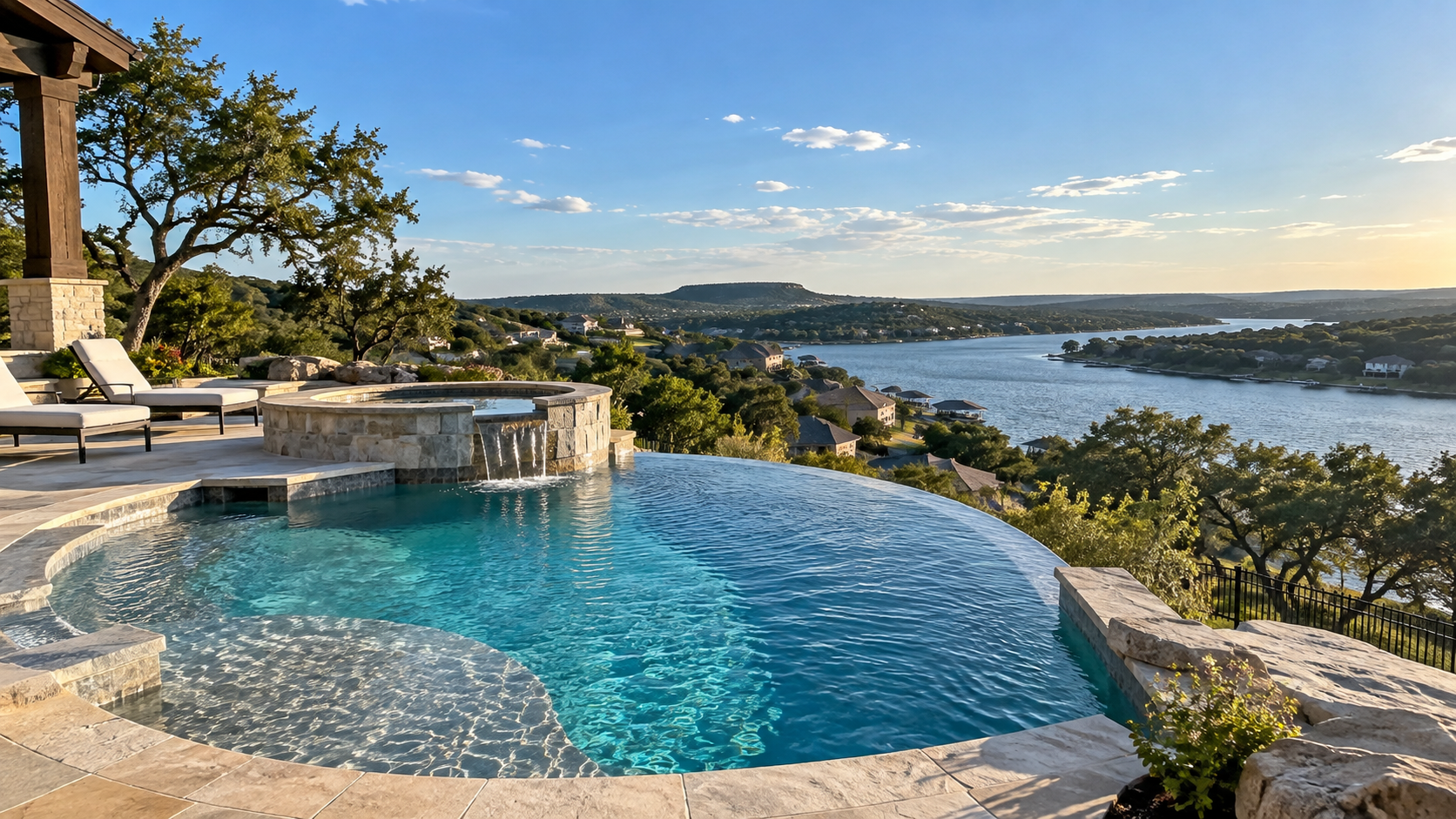
What Marble Falls and Highland Lakes homeowners should know about rock, slopes, lake lots, and timing before building a pool.
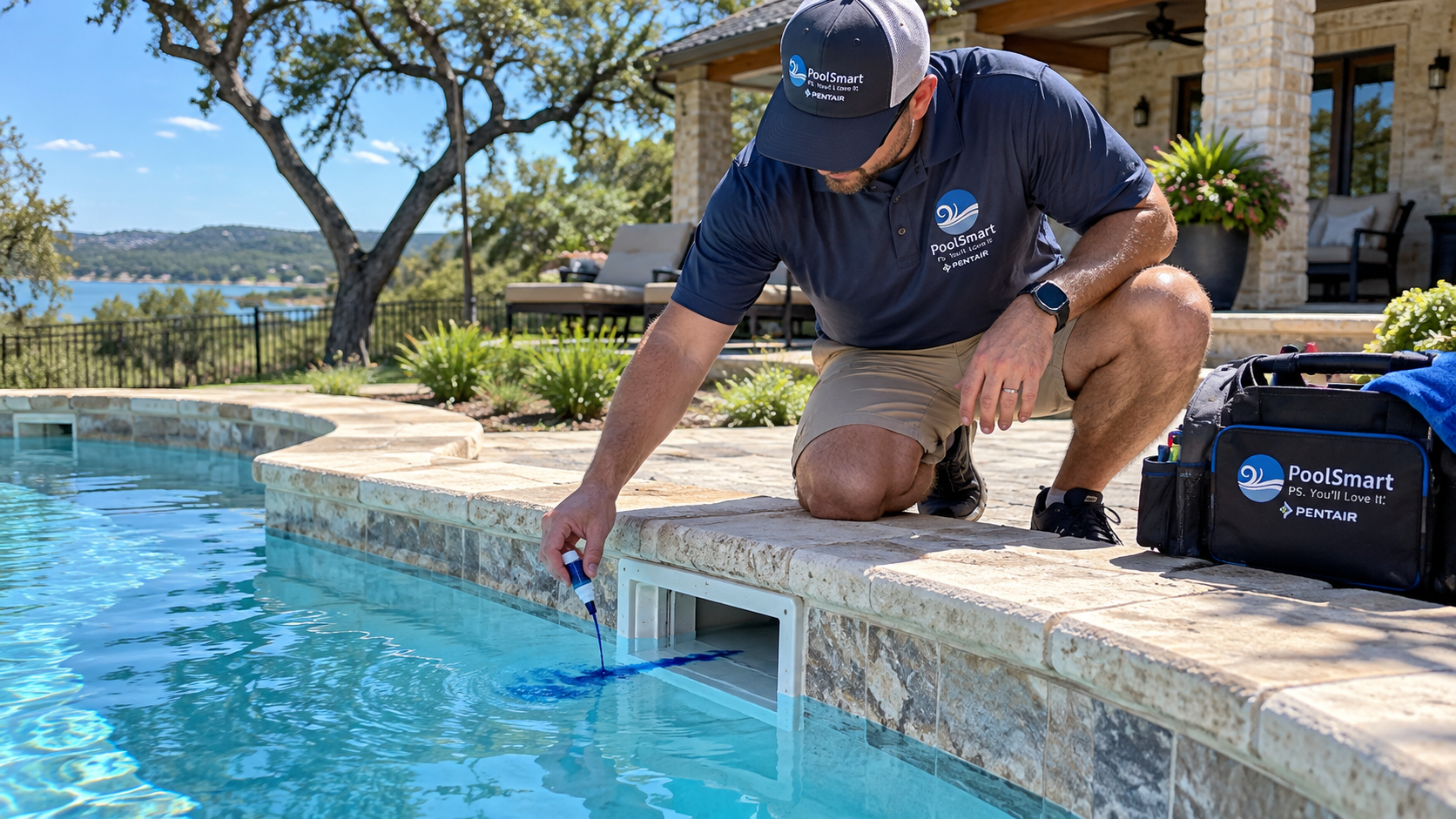
Skimmer leaks are one of the most common causes of pool water loss in Marble Falls and Horseshoe Bay. Learn how to spot the signs, what causes them in the Hill Country, and how Pool Smart fixes them fast.
.svg.webp)
