

August 7, 2026
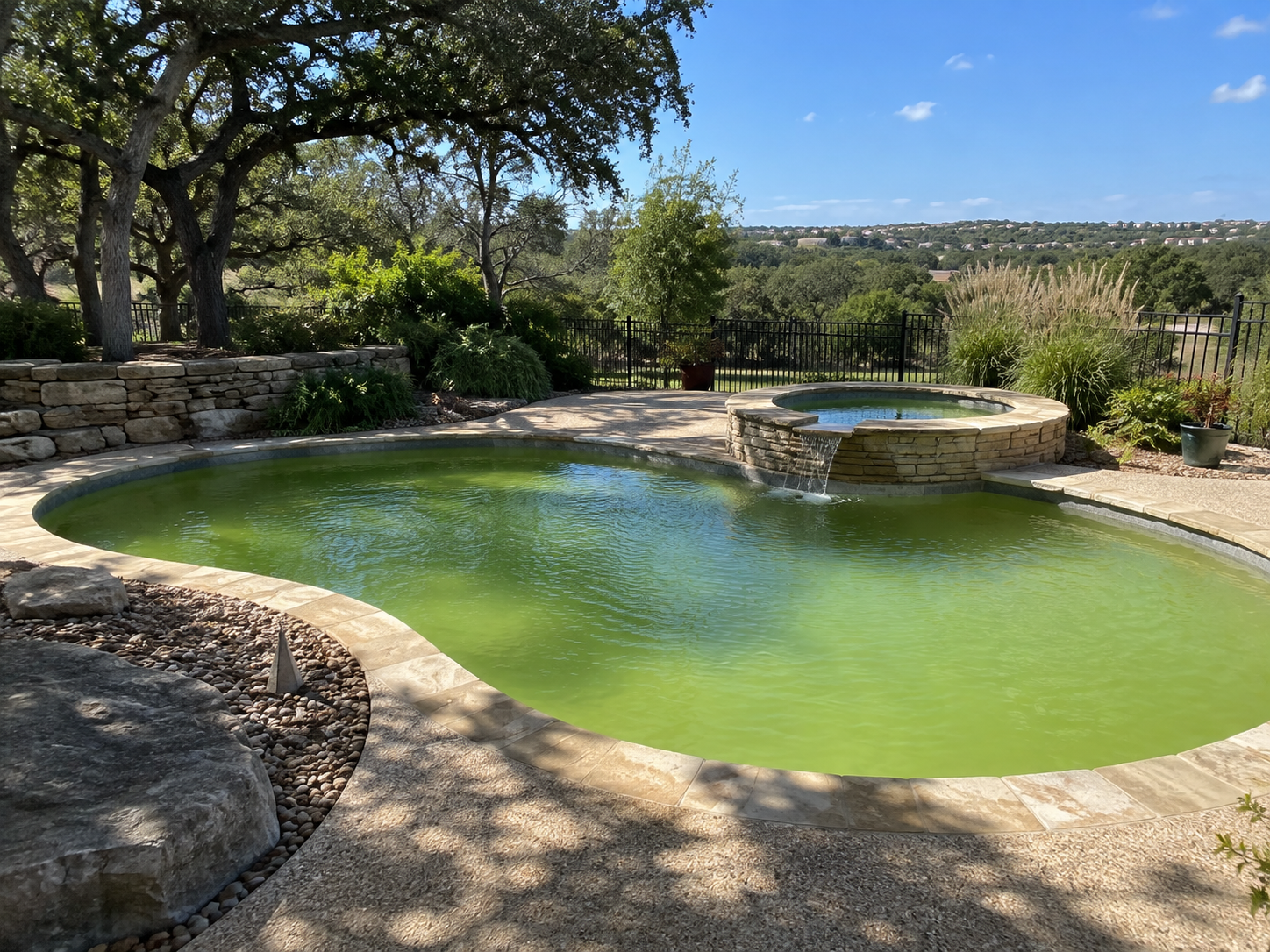
A green pool in Steiner Ranch can happen faster than most homeowners expect, even with a well-maintained backyard. Between Lake Travis humidity, heavy tree cover in older sections of the neighborhood, and the area's mineral-heavy water, a pool that looked fine on Friday can turn into a swamp by Monday. Pool Smart has pulled hundreds of Central Texas pools back from the green, and the process is more predictable than most owners think once you understand what's actually happening in the water.
The good news is that green doesn't mean ruined. It means the chlorine-to-algae ratio flipped, and algae won that round. Getting a pool back takes the right order of operations, not just dumping in more chemicals and hoping for the best by morning.
Steiner Ranch sits close enough to Lake Travis that humidity and organic debris play a bigger role here than in drier parts of the Hill Country. Wooded lots along Quinlan Park Road and the River Ridge section shed leaves, pollen, and cedar debris into pools year round, and all of that organic matter is essentially algae food. A pool that reads fine on Monday can be visibly green by Thursday if a skimmer basket goes unchecked for even a few days.
Rain runoff compounds the problem. A single Hill Country thunderstorm rolling off the ridgelines can wash phosphates and organic material straight into an uncovered pool. Because those phosphates feed algae directly, even a pool with proper chlorine levels can bloom within a day of heavy rain, especially if the storm knocks out power to the pump for a few hours.
Each stage needs a different level of intervention, and treating a Stage 3 problem like a Stage 1 problem is the most common DIY mistake we see across Travis County pools.
Before adding a single chemical, test pH, alkalinity, and chlorine demand. Green water often carries a pH reading that has swung high, sometimes above 7.8, and high pH makes chlorine far less effective no matter how much product goes in the water.
Skipping this step wastes money and time. Homeowners frequently pour in shock treatment while pH is still fighting them, then wonder why the water hasn't cleared after two full days of dosing.
Algae clings to surfaces, and a chlorine shock can't reach what it can't physically touch. Brush walls, steps, and the pool floor thoroughly, paying extra attention to shaded corners near tree lines where algae tends to establish first in Steiner Ranch's wooded lots.
For plaster pools with visible black algae spots, a stiff steel brush is usually necessary, since regular nylon brushes won't break through the protective layer black algae forms over itself.
A standard green pool typically needs a shock dose well above the "maintenance" level printed on most product labels, often two to three times the normal rate depending on how long the bloom has been active. Under-shocking is the single biggest reason algae comes back within a week of a first treatment.
Run the filter continuously during this phase rather than on a normal timer cycle. Filtration is doing as much work as the chemicals at this stage, pulling dead algae cells out of suspension as the chlorine kills them off.
Cloudy-but-not-green water still has dead algae suspended throughout it. This is where owners get impatient and stop filtering too soon, only to watch the pool cloud back up within a day or two of stopping.
Run the filter 24 hours a day until the water passes a real clarity test, not just until it looks decent from the back patio. A pool that looks clear from six feet away can still hold enough particulate matter to feed a second bloom within days.
Steiner Ranch's proximity to Lake Travis means many pools sit near dense tree cover that most other Austin-area neighborhoods don't deal with. That tree cover is beautiful, but it also means more organic debris finding its way into the water even with a pool cover in place.
A pool near heavy tree cover often needs a slightly higher baseline chlorine level year round, not just during active algae recovery. Owners who skim daily and brush weekly tend to see far fewer green-water emergencies than those running on a once-a-month maintenance schedule.
Some situations call for expertise beyond a backyard test kit. Black algae infestations, pools that have stayed green for over a week, or repeated blooms despite proper shocking usually point to an equipment issue, like a failing filter or a pump that's undersized for the pool's actual volume.
Pool Smart services Steiner Ranch pools with diagnostic visits that identify the root cause rather than just treating the symptom. A recurring algae problem is often a filtration or circulation problem wearing a green disguise, and no amount of extra shock will fix a filter that's quietly failing.
Most green pools clear within 2 to 4 days with proper shocking and continuous filtration. Severe Stage 3 blooms with black algae can take up to a week, especially if the filter needs cleaning partway through the process.
No. Cloudy water after shocking still contains high chlorine levels and dead organic material, and reduced visibility is a safety hazard around steps and drains. Wait until the water is fully clear and chlorine levels have stabilized in the normal range.
Recurring algae blooms usually mean either the filter isn't running long enough, phosphate levels are still high from runoff or tree debris, or the shock dose wasn't strong enough for the bloom stage. A professional water test can identify which factor is driving the repeat problem.
A strong shock treatment handles most green pool situations without algaecide. Algaecide is more useful as a preventive measure between treatments or for stubborn strains like black algae that resist standard shock levels.
Draining is rarely necessary and can actually cause structural problems, particularly with the region's expansive clay soil. Proper shocking and filtration resolves the vast majority of algae blooms without needing to drain any water at all.
Costs vary based on how severe the bloom is and whether equipment repairs are needed alongside the chemical treatment. Pool Smart Texas offers a consultation to assess the pool and provide an accurate quote before any work begins.
Don't let a green pool ruin another week of Steiner Ranch summer. Contact Pool Smart today to book a consultation and get your pool back to swim-ready.
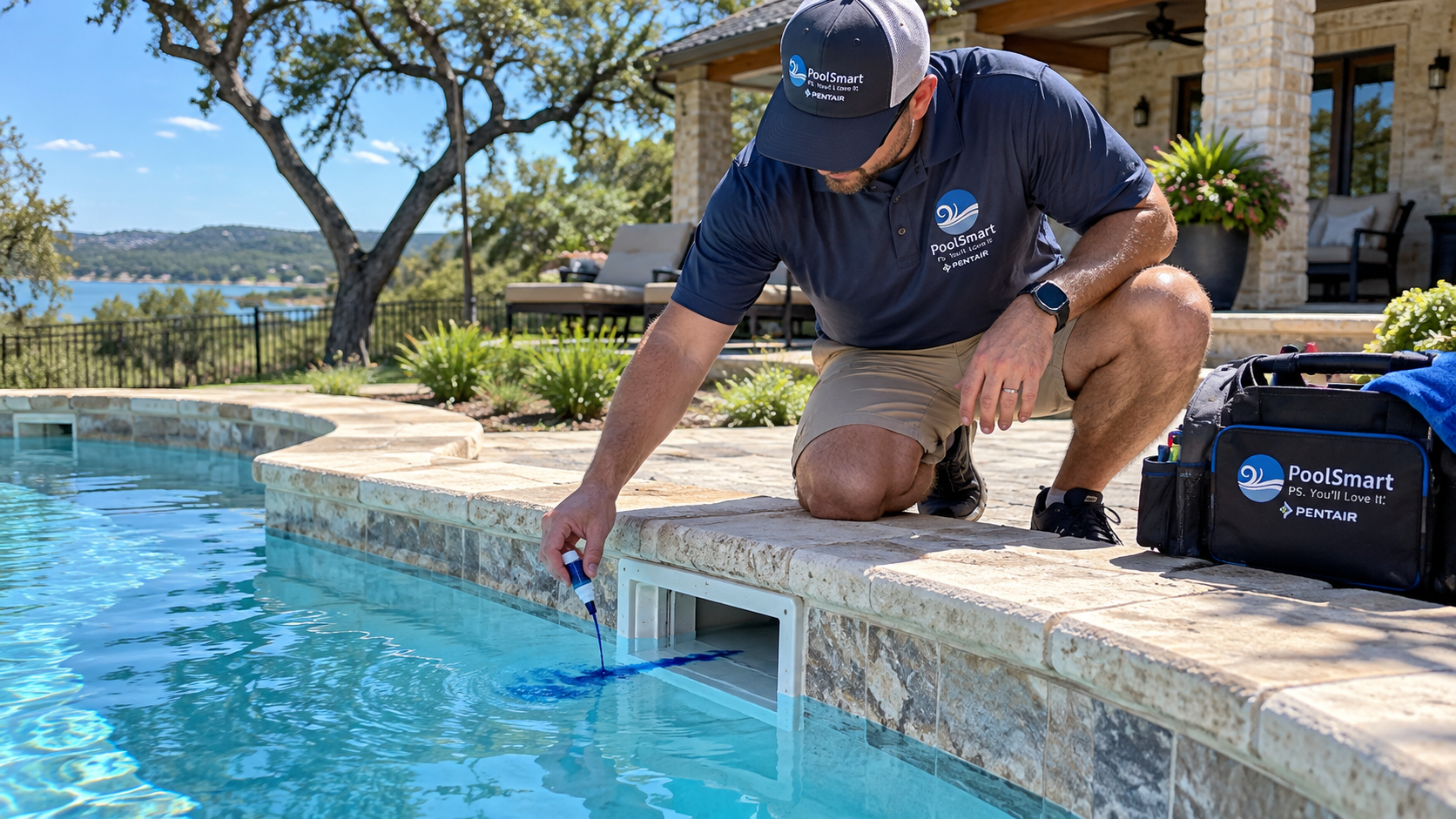
Skimmer leaks are one of the most common causes of pool water loss in Marble Falls and Horseshoe Bay. Learn how to spot the signs, what causes them in the Hill Country, and how Pool Smart fixes them fast.


Standby generators keep your Hill Country home and pool protected when ERCOT goes down. Pool Smart Texas covers installation, freeze protection, and what to expect.

Curious what pool automation actually costs and does? Here's what Kerrville and Lakeway homeowners should know before upgrading.
.svg.webp)
